

Early versions of tile first appeared thousands of years ago. Similar to modern ceramic tile, these early versions were made from naturally occurring regional materials. However, the specific materials, skills, tools, and production methods used for early versions of tile differ from those that are currently used.
Ceramic Building Materials
Creation methods were inconsistent for ancient tile, a period that spanned from about 4,700 B.C. to the end of the Roman Empire around A.D. 500. The makers of the first tiles used various combinations of clay, rocks, sand, and other local materials.
The archeological term “ceramic building material” groups ancient tiles and bricks together. Ceramic building materials weren’t exactly like today’s ceramic tiles but can be considered an early ancestor. These ancient materials have survived thousands of years to prove the durability of even the most simple tile compositions.
The First Tiles
The word “tile” finds its origins in the Latin word “tegula,” meaning “to cover,” and the word “ceramic” comes from the Ancient Greek word “kéramos,” meaning “potter’s earth.”
Some of the first-ever tiles were indeed used to cover and protect buildings. Manufacturers in ancient Mesopotamia (circa 3000 B.C.) made incredibly durable tile bricks by firing clay at high temperatures. These bricks covered building exteriors to protect the buildings from harsh conditions.
Iran Review reports that the glazed bricks and single-colored tiles found at the Royal Gate of Chogha Zanbil (a structure built by the Elamites) are roughly 4,000 years old and are considered the oldest known ceramic tiles. R. Ghirshman, the excavator of the site, named the spot the Royal Gate because of its “large size and because of its decoration of glazed bricks.” Examples of ancient tile used as a decorative art can also be found in Mesopotamia, Persepolis, and Egypt.
The Ancient History Encyclopedia shares another famous example of tile as ancient decorative art: the Ishtar Gate of Babylon (constructed around 575 B.C.). The Ishtar Gate has glazed bricks that form a blue backdrop for intricate tile designs of dragons, lions, bulls, and gods and goddesses of Babylon.
According to Daily Art Magazine, the Ishtar Gate was part of King Nachbuchanezar II’s plan to beautify Babylon and his Mesopotamian kingdom. An inscription on the Ishtar Gate in the voice of Nebuchadnezzar II reads: “I placed wild bulls and ferocious dragons in the gateways and thus adorned them with luxurious splendor that people might gaze on them in wonder.”

Image via Wikimedia Commons | The Ishtar Gate was one of the earliest examples of tile used for artistic purposes that still exists today.
Materials to color tiles may not have been readily available to Mesopotamians, and how the tiles were colored is still unclear. One source states that the blue tiles on the Ishtar Gate could actually be made of lapis lazuli, but the specific method of colorization is currently lost with time.

Image via Wikimedia Commons | This lion was one of many that lined the Procession Way leading to the Ishtar Gate. The blue glazed bricks served as a backdrop for more elaborate tile images, including lions, bulls, and dragons.
Experts see the early ceramic materials found on the Ishtar Gate as an important early step in the development of ceramic tile, specifically because of the colorization and use of tiles.
These discoveries show us that Ancient Rome (circa 800 B.C. to A.D. 476) was not the first civilization to use tiles, but read on to learn how Rome may be the most well-known civilization to use the precursor of our modern-day ceramic tile.
Ancient Roman Tile History and Inspiration
A number of ancient Roman buildings (circa 800 B.C. to A.D. 476) have been well-preserved and offer modern archaeologists insight about the Roman civilization and the construction techniques that were used.
The Roman Empire was adept at picking the best qualities of other civilizations, such as the ancient Greeks, Etruscans, Egyptians, and Persians. Mesopotamia — which by the fall of the Roman Empire had become a part of the Persian Achaemenid Empire (550 to 330 B.C.), the Greek Seleucid Empire (312 to 63 B.C.), and the Roman Empire itself — likely influenced the ceramic-making traditions of each of the Mesopotamian occupiers.
Roman ceramic materials may be considered the second phase in the development of ceramic tile. Most Roman ceramic materials that have been excavated are long and thin, resembling today’s tile more than today’s bricks.
Rome’s widespread use of ceramic materials has had an influence on the way tiles have been used across the world for centuries.
The imbrex and tegula roof is arguably the most significant use of ceramic materials that were used in ancient Rome. The Romans adapted and popularized the style, which the Greeks created.
The Roman roofing style had two main components:
- Tegula (plural tegulae): Flat tiles used to cover the majority of the roof
- Imbrex (plural imbrices): Rounded tile laid over the joints of the tegulae
The South Oxfordshire Archaeological Group describes tegulae as laid across the roof with the imbrices stacked over the seams. This format prevented water from seeping between the tiles and kept buildings dry.
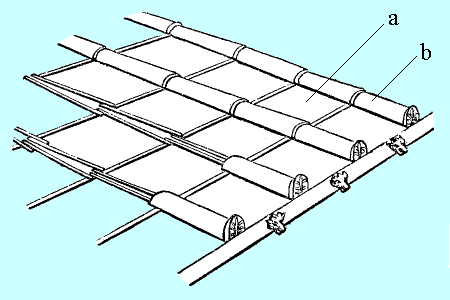
Image via Wikimedia Commons | In the imbrex and tegula roofing system, multiple flat tegulae (A) are lined up with the seams covered by imbrices (B).
According to an article by James Yates in “A Dictionary of Greek and Roman Antiquities,” many of the imbrices and tegulae were made from fired clay, making them a ceramic building material. However, some versions used more expensive materials, such as marble or bronze. For example, the Pantheon used bronze gilded tiles.
These early roofing tiles were molded by craftsmen, including soldiers in the Roman legions who knew how to make these tiles and would carry that knowledge with them as they conquered new regions and expanded the empire.
This method of roofing continues to have an impact on roofing design, as contemporary roofs in Spain and Asia are similar.

Image via Wikimedia Commons | Spanish-style ceramic tile roofs draw heavily from the imbrex and tegula system.
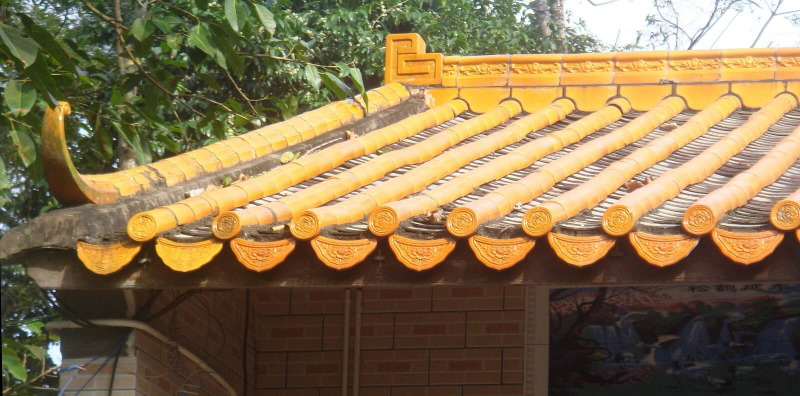
Image via Wikimedia Commons | This roof in Hainan, China utilizes imbrices and tegulae as well, showing just how far-reaching the technique’s impact has been.
Hypocaust (Heating)
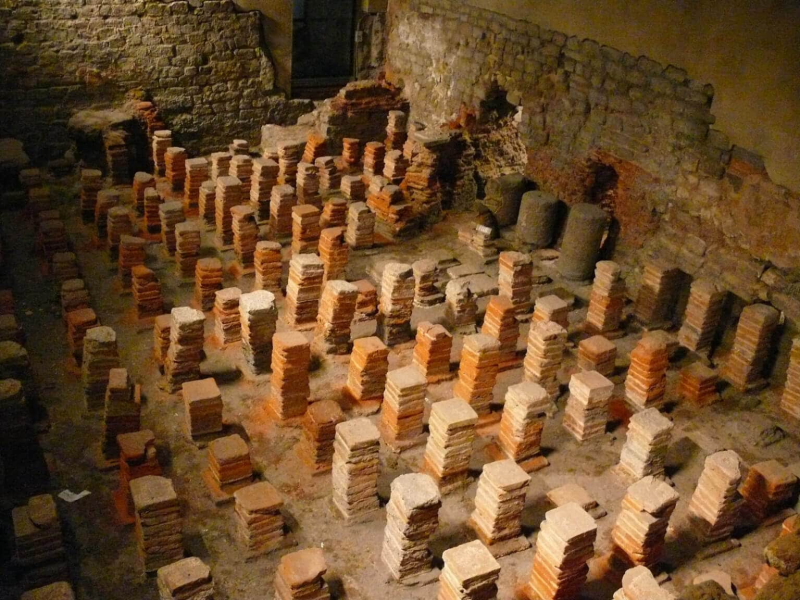
Image via Wikimedia Commons | This Roman hypocaust in Bath, England features many stacks of tiles, which were used to support a floor that is now missing.
One of the more ingenious designs of ancient Rome was the use of a hypocaust to provide heat to different rooms.
Roman history, as told by Romae Vitam, explains that the Roman hypocaust (“hypo” from the Latin for “under” and “caust” from the Latin “to burn”) was an early form of central heating via burning wood for a complex underground heating system. Rooms that were to be heated by the hypocaust were specially built for the multitiered system utilizing ceramic tiles to maintain the heat.
Tile tubes called “caliducts” were placed under the walls in some hypocausts. This would allow the heat to travel through the walls and out of flues to circulate hot air throughout a building.
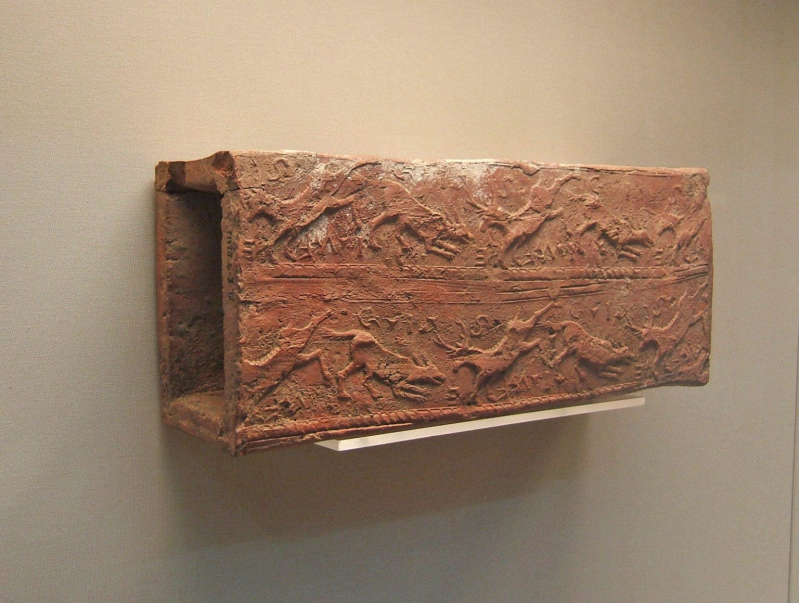
Image via Wikimedia Commons | Despite the ornate appearance of this caliduct, the tile work would have been hidden behind walls and completely out of sight.
Hypocausts were most common in Roman bathhouses, although some private residences also had hypocausts installed. Only wealthy Romans could afford hypocausts, as burning massive amounts of wood on a regular basis was expensive.
A significant risk to this method of heating was the danger of CO2 leaking into rooms. The engineering of hypocausts was important to make sure the hot air and smoke did not leak through the walls and floors and increase the risk of CO2 poisoning.
The solid and durable tiles and caliducts were able to endure the heat and keep rooms sealed and protected from hazardous gases. Crafting the tiles and constructing the system would have required expertise to prevent these potential hazards.
Tile Art in the Roman Empire
The exquisite use of tile in art and architecture had both practical and aesthetic purposes in ancient Rome. Tiles were used for wall and floor coverings while also creating a beautiful display. A treasured example of a practical and artful tile installation is the Alexander Mosaic (circa 100 B.C.).
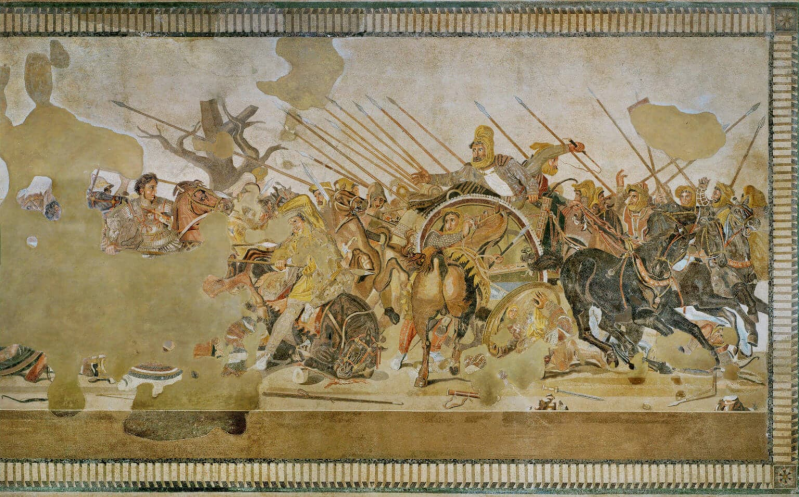
Image via Wikimedia Commons | The Alexander Mosaic depicts a battle between Alexander the Great and King Darius of Persia.
he Alexander Mosaic was discovered in 1831, nearly perfectly preserved by the ash from the famous Pompeii eruption of Mount Vesuvius in A.D. 79. The mosaic depicts a clash between Alexander the Great and King Darius of Persia and is believed to be based on a Hellenistic painting from around 300 B.C.
Mosaics such as the Alexander Mosaic were common during the Roman era according to Ancient History Encyclopedia . These mosaics were made of tile and other materials, including marble, glass, and seashells.
Decorative individual tiles also emerged during this period. One example of art on an individual tile is the antefix, a decorative addition to the imbrex and tegula roofing structure. Made from ceramics, an antefix was typically a large, flat tile that featured carvings depicting people, scenes, gods and goddesses, or elaborate patterns. The lasting influence of the antefix is apparent in medieval Europeans’ use of decorative ridge tiles for roofs.
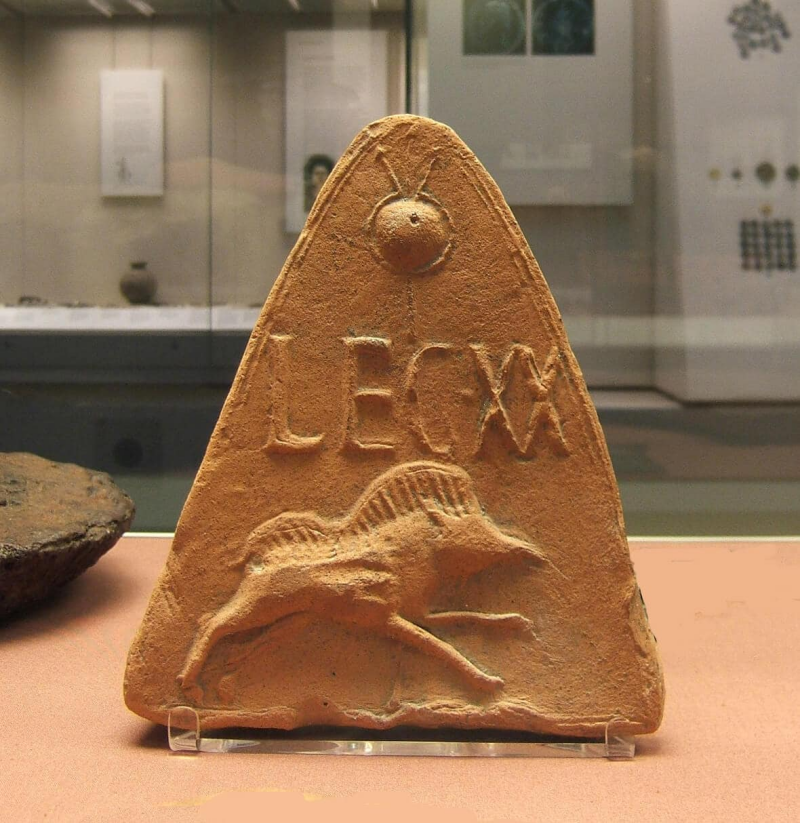
Image via Wikimedia Commons | “Legion XX” is an antefix from Wales that depicts a boar, the symbol of the legion.
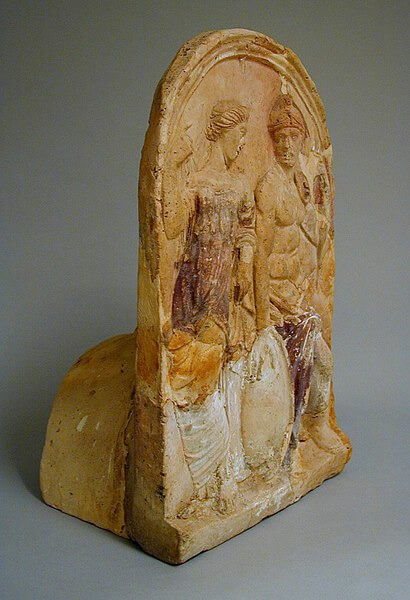
Image via Wikimedia Commons | This antefix from between late first century B.C. and early first century A.D. features Venus and her lover Mars.
The Lasting Influence of Roman Tile
The Roman Empire fell in the fifth century, but its architectural innovations — and its use of ceramic tile, in particular — had a lasting impact that’s still seen today.
Rome’s most obvious contribution to modern ceramic tile may be seen in our continued use of the imbrex and tegula roofing method. Imbrex and tegula roofs offer a roofing solution that’s both functional and aesthetically pleasing, and can be found today from Europe to Asia to North America.
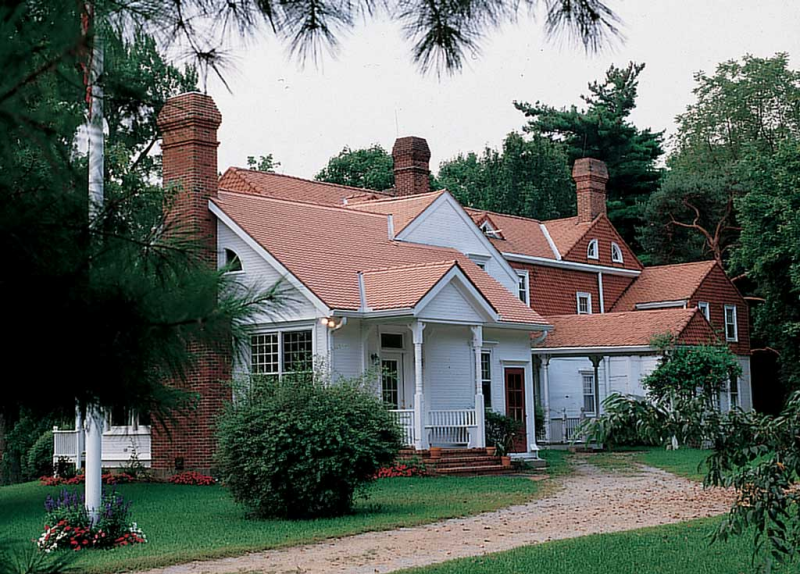
A contemporary home with an imbrex and tegula roof
However, Rome’s most significant impact on modern ceramic tile is both more comprehensive and more difficult to trace.
The Romans not only developed the original ceramic building materials closer to modern ceramic tile, but they also introduced tile to Western Europe as they expanded their empire, enabling the occupied nations to develop ceramic tile in their own unique ways. Just as all roads once led to Rome, many countries in Europe, North Africa, and West Asia may trace their tile history back to the Roman Empire.
As archaeologists continue to uncover more remains of Roman ceramic tile, our understanding of Rome’s importance to ceramic tile history will only grow.
Medieval European Tile History and Inspiration
The period after the fall of the Roman Empire in A.D. 476 and before the Renaissance in the 14th century is commonly referred to as the Middle Ages or medieval period.
Now divided into individual nation states, the people of Europe turned to the Catholic Church to unify them. The thousand-plus years that make up the Middle Ages encompassed numerous different periods, ranging from the Byzantine and Anglo-Saxon to the Romanesque and Gothic, but the Church was nevertheless an effective unifier both culturally and artistically.
Although the name “Middle Ages” comes from the Renaissance period’s assumption that little of scientific or artistic significance was achieved during this time, contemporary historians maintain “that the era was as complex and vibrant as any other.” In fact, medieval communities showed their devotion to the Church by building impressive cathedrals, monasteries, and other religious structures, for which they turned to desirable materials, such as ceramic tile.